
Custom camera firmware is suddenly a hot topic again, and this time the reason is AI. Artificial intelligence is changing everything that is software, and the firmware inside our cameras is software too. In just a couple of weeks people brought back features Sony had removed from the A7, vibe-coded film looks into old Canons and started digging into Fujifilm firmware.
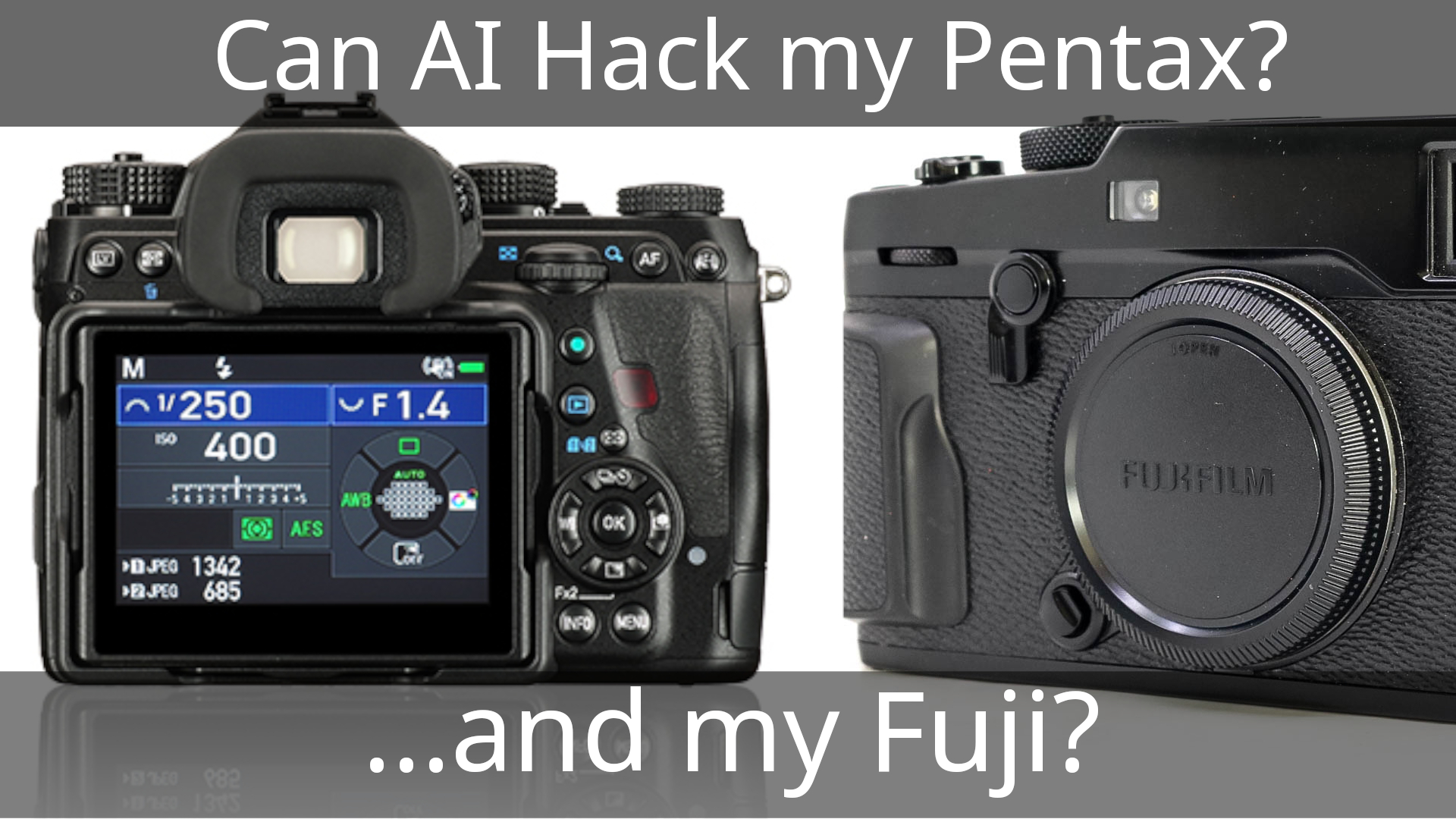
As a Pentax shooter I had to ask the obvious question: can AI hack my Pentax? In this new video I checked what really exists today for Fujifilm and Pentax, why Pentax users don’t seem to care much about it, and what you risk before you touch the firmware of your own camera.
What camera firmware is
Firmware is the software that runs your camera: the menus, the autofocus, the way the sensor data becomes a JPEG, the video modes, everything. Manufacturers update it for a few years after launch, then they move on to the next model. Your old camera is still perfectly good hardware, but it will never get a new feature again. Custom camera firmware is the idea of changing that from the outside. Years ago I wrote that Fujifilm was one firmware option away from the perfect camera, and I’m still waiting for that option.
From Magic Lantern to AI
The idea is not new. Magic Lantern has been adding features to Canon DSLRs for many years, but it took a small group of very skilled developers a huge amount of time to reverse engineer each camera. What is changing now is that AI tools help people read, understand and modify code much faster. You still need knowledge and patience, but the barrier is much lower than it was, and that’s why so many custom camera firmware projects are appearing at the same time.
Fujifilm, Ricoh and Pentax
On the Fujifilm side there is already real work going on: FujiMod for the X70 and the long-running Fujihack project. For the Ricoh GR III and IIIx there is GRLife, an unofficial browser-based tool to build custom firmware. For Pentax, at the moment, there is nothing comparable. In the video I talk about why Pentax users seem less interested in hacking their cameras, and what I think about it.
I shoot Pentax and many of my followers ask me about Pentax gear, so this is not an abstract question for me. Bodies like the K-1 and the K-3 Mark III are still excellent tools today. Pentax cameras are built to last for many years, and that is exactly the kind of camera that could get a second life from custom camera firmware: new features on a body you already own, without spending money on new equipment.
The risks before you try
A word of caution: unofficial firmware can brick your camera and void the warranty. A failed flash can turn an expensive body into a paperweight. If you want to experiment with custom camera firmware, do it only on an old body you don’t need for work, the one sleeping in the drawer. Never on the camera that pays your bills.
Why it matters: who owns your camera?
There is a bigger question behind all this. When you buy a camera, do you really own it, or are you only allowed to use it the way the manufacturer decides? Farmers learned this lesson with John Deere tractors, where software locks made even simple repairs impossible without the dealer. Cameras are not tractors, but the principle is the same. Maybe AI will give photographers back a bit of control over the tools they paid for.
Projects mentioned in the video
- FujiMod (Fujifilm X70)
- Fujihack
- GRLife for Ricoh GR III/IIIx
- The Phoblographer’s Sony hack
Are you hacking a Pentax?
If you are working on custom camera firmware for a Pentax, or even just thinking about it, tell me in the comments here or under the video on YouTube. Maybe we can start something together. And if you have an old camera in the drawer, now you know which body should be the first test.